Saturday, February 13, 2016

Land of Lord Buddha


Lumbinī (Nepali and Sanskrit: लुम्बिनी  "the lovely") is a Buddhist pilgrimage site in the Rupandehi District of Nepal. It is the place where, according to Buddhist tradition, Queen Mayadevi gave birth to Siddhartha Gautama in 563 BCE.Gautama, who achieved Enlightenment some time around 528 BCE,[3][4] became the Gautama Buddha and founded Buddhism.[5][6][7] Lumbini is one of many magnets for pilgrimage that sprang up in places pivotal to the life of Gautama Buddha; other notable pilgrimage sites include Kushinagar, Bodh Gaya and Sarnath.

Wednesday, February 10, 2016

WORLDS BEST COUNTRIES (CLIMATE)

The World's Best Climate: 3 Countries

        Nepal: Something for everyone

Nepal is a landlocked country which is surrounded by China and India.Nepals climate is influenced by maritime and continental factors, and has four distinct seasons. Spring lasts from March to May, and is warm with rain showers, and temperatures around 22°C. Summer, from June to August, is the monsoon season when the hills turn lush and green. Temperatures can get quite warm, up to 30°C and more during heat waves. During this season, trekking in most of Nepal is difficult and uncomfortable, the trails being very muddy.Nepal attracts tourists from all over the world.
Kathmandu in summer
Autumn, from September to November, is cool with clear skies and is the most popular season for trekking. Temperatures are not too warm, with daily maxima about 25°C and cool nights with minima of 10°C, it usually does not rain for more that one or two days during the entire autumn and the winter season. 
Winter time in Jumla
In winter, from December to February, it is cold at night with temperatures sometimes below zero. However, the maximum temperatures can still reach up to 20°C. Then the mountains are covered with snow including some high hills.
Boudhanath in summer
Though there are not any beaches in Nepal, summer is never boring.


Spain: Cool Mountain Towns and Warm  Beaches

On Spain’s long coastline (and as a peninsula, it has plenty of coast), temperatures tend to be mild, with no temperature extremes. Weather is generally hotter in the south and cooler in the north…but nowhere along the coast are the average summer highs and average winter lows more than about 25 F to 30 F apart. This reliably mild weather is one reason why Spain’s coasts are so popular with expats.
Summer in spain

On the southern coast—the Costa del Sol and the Costa de la Luz, for instance—average temperatures vary from the 80s F in summer to the 60s F in winter. These coasts are famous for offering more than 300 days of sunshine a year, with low humidity. This means you can enjoy an outdoor lifestyle year-round.This country is one of the country which every human being should visit once in a life time.
 If cool, moist weather like that of the U.S.’s Pacific Northwest is more your style, then head to Spain’s northwest coast, so-called “Green Spain.” Here lush green hills roll right down to the sea, rain is frequent, and the weather is cool and mild. Average temperatures range from the high 60s F and low 70s F in summer to the 40s F and 50s F in winter.
montain town in spain


   Mexico: Vacation spot

Mexico has got a wide range of climate. Add to that its varied terrain—with mountains, desert, jungles, and everything in between—and you have a country with every sort of climate you might want.

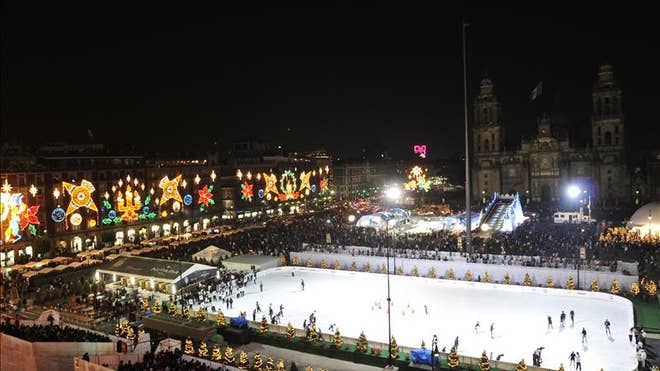
Mexico in Winter
 Mexico has five different climate types.Humid tropical, tropical savanna,desert,steppe,highland are different climate types in Mexico.Changes in elevation causes climates to vary widely in a short distances.While,the mountain valley has got mild climate throughout the year.Coastal areas have a warm climate with a summer rainy season.

Glowing autumn in Mexico
 Yucatan peninsula and northern Mexico have a hot and dry climate. Along most of Mexico’s coasts, as well as in far-southern Mexico (the Yucatán Peninsula), the weather is semi-tropical—humid and hot. May to October is the rainy season in these areas, with hot, sometimes-cloudy days punctuated by brief but intense rainstorms. (It seldom rains steadily all day.) Winter is the dry season, with lower humidity, lower temperatures, and sunny days. Along the central Pacific Coast—in Puerto Vallarta (pictured), for instance expect average temperatures from the low 70s F in winter to the low 80s F in summer. In the Yucatán, average temperatures can run 10 or more degrees hotter. This place is one of the finest place in all over the world.


Monday, February 8, 2016

Karnali,the Nile of Nepal

Karnali, also known as Ghaghara is the longest river of Nepal with a length of 507 kilometres (315 mi).It cuts through the Himalayas inNepal and joins the Sharda River at Brahmaghat in India. Together they form the Ghaghra River, a major left bank tributary of the Gangas .The total length of Ghaghara River up to its confluence with the Ganges at Doriganj in Bihar is 1,080 kilometres (670 mi). It is the largest tributary of the Ganges by volume and the second longest tributary of the Ganges by length after Yamuna.

Friday, February 5, 2016

HINDUISM

A hindu saint

Hinduism has been called the oldest religion in the world,and some practitioners and scholars refer to it as Sanatana Dharma"the eternal law" or the "eternal way"beyond human origins. Scholars regard Hinduism as a fusion or synthesis of various Indian cultures and traditions, with diverse rootsand no founder.This "Hindu synthesis" started to develop between 500 BCE and 300 CE,after the Vedic times. Hinduism prescribes the eternal duties, such as honesty, refraining from injuring living beings ahimsa, patience, forbearance, self-restraint, compassion, among others.

Hinduism includes a diversity of ideas on spirituality and traditions, but has no ecclesiastical order, no unquestionable religious authorities, no governing body, no prophet(s) nor any binding holy book; Hindus can choose to be polytheistic, pantheistic, monotheistic, monistic, agnostic, atheistic or humanist

Monday, February 1, 2016

Largest fresh water lake of Nepal

Rara lake of mugu


Rara lake is the largest and deepest of Nepal.It lies in the mugu district of Karnali zone.
167 m (548 ft), is 5.1 km (3.2 mi) long and 2.7 km (1.7 mi) wide. It drains into the Mugu Karnali River via the Nijar River.It is the lake with fresh water.

Rara Lake, being surrounded by Rara National Park, has unique floral and faunal importance with rare and vulnerable species. The park was established in 1976 to preserve the beauty of the lake and protect it from sedimentation and adverse human activities. The Park flora consists of 1074 species, of which 16 are endemic to Nepal; the fauna includes 51 species of mammals and 214 species of birds.

Sunday, January 10, 2016

ENDANGERED ANIMALS

CRITICALLY ENDANGERED ANIMALS

Sumatran Orangutan (Indonesia)
Sumatran Tiger (Indonesia)
Lear’s Macaw (Brazil)
Brown Spider Monkey (Colombia, Venezuela)
Rancho Grande Harlequin Frog (Venezuela)
Panamanian Golden Frog (Panama)
Pygmy Three-toed Sloth (Panama)
Yellow-crested Cockatoo (Indonesia)
Golden-bellied Capuchin (Brazil)
Elegant Frog (Australia)
Orinoco Crocodile (Colombia, Venezuela)
Mountain Gorilla (Rwanda, Uganda, Democratic Republic of Congo)
Golden Mantella (Madagascar)
Eastern Red Colobus (Kenya)
Javan Rhinoceros (Indonesia, Vietnam)


ENDANGERED ANIMALS

Bonobo (Democratic Republic of Congo)
Bornean Orangutan (Indonesia, Malaysia)
Common Chimpanzee (Eastern and Central Africa)
Golden Poison Frog (Colombia)
Hyacinth Macaw (South America)
Great Green Macaw (Central America)
Maned Three-toed Sloth (Brazil)
Diana Monkey (West Africa)
Indian Wild Dog (Dhole) (South Asia)
Aye-Aye (Madagascar)
Indian Elephant (India and South East Asia)
Golden Lion Tamarin (Brazil)
Red Slender Loris (Sri Lanka)
Proboscis Monkey (Indonesia)
Javan Langur (Indonesia)
Diademed Sifaka (Madagascar)
Mahogany Glider (Australia)
Giant Otter (South America)
Bengal Tiger (South East Asia)
Mountain Tapir and Baird’s Tapir (South America)

 VULNERABLE ANIMALS

Blue Poison Frog (Suriname)
Giant Armadillo (South America)


Wednesday, December 2, 2015

Oldest City,BHAKTAPUR


Bhaktapur (Nepali: भक्तपुर Bhaktapur ), literally translates to Place of devotees. Also known as Bhadgaon or Khwopa (Newar: ख्वप Khwopa), it is an ancient Newar city in the east corner of the Kathmandu Valley, Nepal, about 8 miles (13 km) from the capital city, Kathmandu. It is located in Bhaktapur District in the Bagmati Zone.
Bhaktapur was the largest of the three Newar kingdoms of the Kathmandu Valley, and was the capital of Nepal during the great 'Malla Kingdom' until the second half of the 15th century. Today it is the third largest city in the Kathmandu Valley, with a population of more than 80,000, of which the vast majority are still Newars. Historically more isolated than the other two kingdoms, Kathmandu and Patan, Bhaktapur has a distinctly different form of Nepal Bhasa language.
Bhaktapur has the best preserved palace courtyards and old city center in Nepal, and is listed as a World Heritage Site by UNESCO for its rich culture, temples, and wood, metal and stone artworks. This is supported by the restoration and preservation efforts of German-funded Bhaktapur Development Project (BDP).

The city is famous for special type of curd called "Ju Ju(king) dhau(curd). It is experienced by the curd makers that the taste of curd prepared in this location cannot be found elsewhere all over Nepal.